+977 9868136870 (Shankar) Mail Us | Make an Enquiry
Bhaktapur Durbar Square Day Tour | Complete Travel Guide
Bhaktapur Durbar Square Day Tour: A Complete Guide to Nepal’s Living Heritage
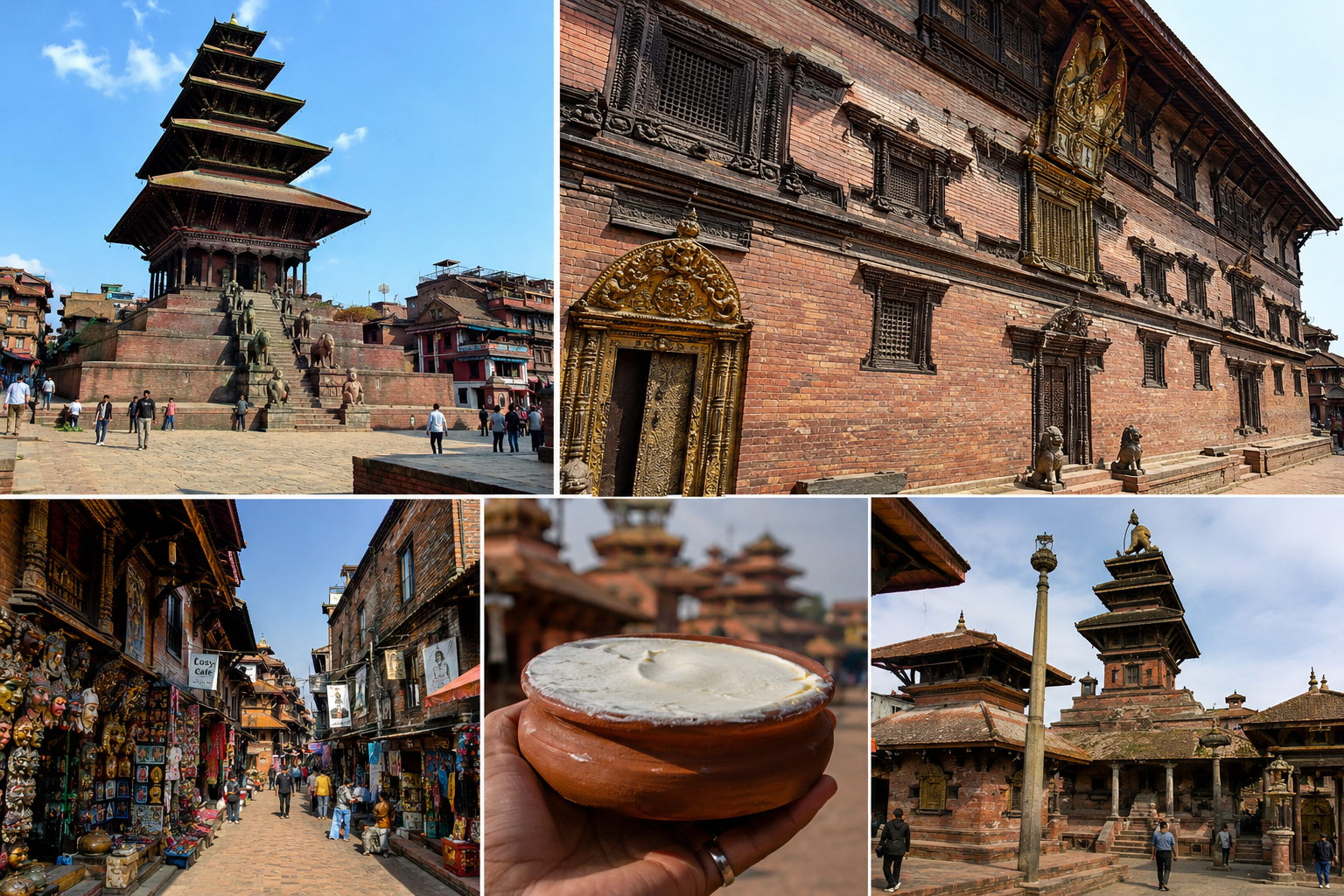
Bhaktapur Durbar Square, which is only a short distance from Kathmandu, provides a fascinating glimpse into Nepal's medieval past. The site features beautifully preserved temples, traditional courtyards, elaborate woodcarvings, streets paved with bricks, and a centuries-old Newari culture, so Bhaktapur appears very different from the busy roads of present-day Kathmandu.
For travelers who would like to experience Nepal's history and culture without having to follow a lengthy itinerary, a day tour of the Bhaktapur Durbar Square is an excellent option. In one day you are able to visit historic monuments, see traditional craftsmanship, eat genuine Newari food, and stroll around the streets which still have a great deal of their traditional character.
Bhaktapur is more than just an archaeological site; it is a living city and as part of the Kathmandu Valley's cultural heritage it has been included in the list of UNESCO World Heritage Sites. There, history, architecture, festivals, art and everyday life all continue to coexist.
If you are a tourist visiting Nepal for the first time, if you are a lover of culture, if you are a photographer, or if you are just seeking an enjoyable day trip from Kathmandu, then Bhaktapur should be included on your schedule.
Why go on a Bhaktapur Durbar Square day tour?
Bhaktapur is one of the top places near Kathmandu for travellers who are interested in Nepal's traditional architecture and Newari culture; instead of making a brief visit, a carefully arranged day trip allows you to take the time needed to notice the various details scattered throughout the old town.
The main draw is the fact that the historic monuments are all close to one another. Temples, royal courtyards, stone sculptures, traditional houses, and public squares are within walking distance of each other, which makes it very pleasant to explore Bhaktapur on foot.
A day trip also provides you with the chance to see aspects of the city other than its well-known monuments. You can stroll down the narrow streets, observe local artisans as they work, visit traditional pottery workshops, and then go to a local restaurant to taste genuine Newari food.
Best Places to Visit During a Bhaktapur Day Tour
1. Bhaktapur Durbar Square
Bhaktapur Durbar Square, which is at the centre of the historic city, consists of a remarkable assortment of palaces, temples, courtyards, sculptures, and traditional buildings.
The square was the royal centre of the Bhaktapur Kingdom in the Malla period and now offers a impressive overview of the artistic and architectural accomplishments of medieval Nepal.
When you are walking around the square, rather than just taking photographs of the main monuments, take the time to examine the stone sculptures, the wooden windows, the carved doors, and the architectural details.
2. 55-Window Palace
The 55-Window Palace is one of the most readily identifiable features of Bhaktapur and was constructed during the Malla period; it is well known for its intricate wooden windows and the traditional Newari craftsmanship.
The great intricacy of the windows shows how skilled Nepal's traditional woodcarvers are. At the same time, the palace complex throws some light on the city's royal history.
3. Golden Gate
The Golden Gate, located at the entrance to the palace courtyard, is one of the best examples of metalwork in the Kathmandu Valley.
The intricate decorations show religious figures and traditional designs, which makes it a significant artistic element of the Bhaktapur Durbar Square.
The gate looks especially impressive when seen in connection with the rest of the palace buildings.
4. Nyatapola Temple
You cannot consider a day tour of Bhaktapur to be complete unless you visit the Nyatapola Temple. This five-storey pagoda, which is situated in Taumadhi Square, is one of the most iconic instances of traditional pagoda architecture in Nepal; the name reflects this because it means "five-storey temple" and refers to the pagoda's characteristic five levels.
The temple is dedicated to Siddha Lakshmi and is built on a raised platform with a number of large stone figures along the staircase. The route to the upper level also offers a excellent view of Taumadhi Square and the adjacent traditional buildings.
5. Bhairavnath Temple
The Bhairavnath Temple, which is situated near the Nyatapola Temple, is also a significant landmark in Taumadhi Square. The temple is dedicated to Bhairava, who is a fierce form of Shiva, and is significant within the local religious traditions and festivals.
The impressive three-storeyed pagoda structure means that it is a significant point when you are visiting Bhaktapur.
6. Dattatreya Square
The atmosphere of Dattatreya Square is different from that of the larger Durbar Square. The square revolves around the Dattatreya Temple and is surrounded by traditional buildings, monasteries, woodcarving workshops, and old structures.
It's a great spot for slowing down and watching everyday life in the old city.
7. Dattatreya Temple
The Dattatreya Temple is thought to be one of the oldest temples in Bhaktapur and is dedicated to Dattatreya, a god linked with the combined forms of Brahma, Vishnu, and Shiva.
The temple's traditional architectural style together with the sculptures around it makes it a significant cultural destination.
8. Pottery Square
For anyone who is interested in traditional crafts, Pottery Square is one of the most enjoyable places to visit in Bhaktapur. Clay pots and other pottery articles have always been made by the local potters. People visiting the area might see the clay being shaped, dried or prepared for firing, depending on the season and the activities of the local artisans.
It's also an excellent spot for photography and for experiencing the traditional craft culture of Bhaktapur.
9. Peacock Window
The Peacock Window is one of Bhaktapur's best known works of woodcarving. The window, which is beautifully carved out of wood, shows a peacock design and is a true reflection of the remarkable craftsmanship associated with the Kathmandu Valley.
It might seem like you're coming across a small work of art when you're wandering around the older parts of the city.
A Suggested Bhaktapur Day Tour Itinerary
A day trip from Kathmandu can start in the morning and go on into the afternoon.
Morning:
Begin your trip in Kathmandu and go to Bhaktapur; upon arrival, start exploring the Bhaktapur Durbar Square and see the 55-Window Palace, the Golden Gate, the Taleju area and the other nearby monuments.
Late Morning:
Go on to Taumadhi Square and see the Nyatapola Temple and the Bhairavnath Temple. Take some time to explore the streets and the traditional architecture around them.
Lunch:
Stop by a restaurant in the area and have some traditional Newari food; it's a great chance to experience another key element of Bhaktapur's cultural identity.
Afternoon:
Head on to Dattatreya Square and have a look at the Dattatreya Temple, the traditional courtyards, the monasteries, and the local workshops. Go to Pottery Square and search for the traditional crafts and the well-known Peacock Window.
Late Afternoon:
Take a leisurely walk through the historic streets before going back to Kathmandu.
The itinerary may be altered according to your interests, your walking speed, the traffic conditions, and other places you might wish to see in the Kathmandu Valley.
What Makes Bhaktapur Special?
Unlike many other tourist destinations, Bhaktapur is special since its heritage doesn't consist only in monuments.
The old city is still closely linked with Newari traditions and daily community life, with traditional houses situated along the narrow streets, artisans going on with the crafts which have been passed down for centuries, and religious festivals causing the historic squares to come alive.
Another major attraction is its architecture, with terracotta bricks, carved timber windows, pagoda-style temples, stone sculptures, and intricately decorated courtyards giving it a distinct visual identity.
Photographers will find in the city a number of opportunities, whether they are looking at grand temples and historic squares or at the quiet alleys and the small aspects of traditional life.
Experience Traditional Newari Food
Food should form an important element of your day tour of the Bhaktapur Durbar Square. Bhaktapur is especially well known for Juju Dhau, a traditional Newari yoghurt which has a rich and creamy texture. It is usually served in traditional clay pots and is one of the city's most popular local specialties.
Depending on the restaurant and the season, you might also consider trying other Newari dishes. Among the ones you should look out for are:
- Bara, a savory lentil pancake
- Chatamari, often described as a Newari-style rice crepe
- Yomari, a traditional steamed sweet dumpling
- Newari khaja sets featuring a variety of local dishes
- Juju Dhau, the famous Bhaktapur yogurt
Eating local food provides an extra aspect to your cultural experience and offers you the opportunity to become involved with the city's culinary traditions.
Best Time for a Bhaktapur Durbar Square Day Tour
Bhaktapur may be visited at any time of the year, but the experience will differ according to the season.
In spring the weather is pleasant and walking and sightseeing are usually quite comfortable. Outdoor activities are especially enjoyable during the months from March to May.
Autumn is one of the most popular times for tourists to visit Nepal, and from September through November the weather is usually comfortable, which makes it an ideal season for touring Bhaktapur.
Winter is also a good season for sightseeing, especially during the day. It is advisable to take an extra layer since the mornings and evenings can be cold.
The monsoon results in rain falling in the Kathmandu Valley; even though the wet conditions make walking less convenient the city can still be seen, particularly during breaks in the rain.
If you have a flexible schedule, it will help you to enjoy the historic squares before they get more crowded by getting there in the early morning.
How to Reach Bhaktapur from Kathmandu
Bhaktapur is located in the eastern part of Kathmandu Valley and is easily accessible from Kathmandu.
The journey generally takes around 30–60 minutes depending on your starting point and traffic conditions. Kathmandu Valley traffic can be unpredictable, so it is wise to allow extra travel time.
You can reach Bhaktapur by:
- Private car or tourist vehicle
- Taxi or ride-hailing service
- Public bus
- Organized guided tour
For travelers interested primarily in history and culture, a private or guided Bhaktapur day tour can be particularly convenient because transportation, sightseeing, and local explanations can be combined into one itinerary.
Entrance Fees and Practical Information
Bhaktapur Durbar Square is a protected heritage area, and visitors are required to pay an entrance fee. Fees and regulations can change, so it is best to confirm the current rate before your visit.
A few practical tips can make your experience more comfortable:
- Wear comfortable shoes because the historic area is best explored on foot.
- Carry drinking water, especially during warmer months.
- Keep some local currency with you for food, entrance fees, and small purchases.
- Dress respectfully when entering temples and religious sites.
- Ask before photographing people, religious ceremonies, or private activities.
- Give yourself enough time to explore the smaller courtyards and side streets.
- Avoid rushing between attractions; some of Bhaktapur's best experiences are found away from the main square.
Why Hire a Local Guide?
Bhaktapur's architecture is impressive even without a guide, but understanding the stories behind the monuments can make the experience significantly more meaningful.
A knowledgeable local guide can explain the history of the Malla period, the religious significance of temples, traditional Newari architecture, local festivals, and the symbolism found in sculptures and carvings.
Instead of simply seeing an old temple, you begin to understand why it was built, who worshipped there, and how it remains connected to the local community.
For first-time visitors, a guided tour can therefore provide considerably more cultural depth than exploring independently.
Photography Tips for Bhaktapur
Bhaktapur is one of the best places in the Kathmandu Valley for architectural and street photography.
Early morning provides softer light and a quieter atmosphere, while late afternoon can create beautiful warm tones across the brick buildings and temples.
Look beyond the obvious landmarks. Traditional windows, temple carvings, courtyards, pottery, local shops, and everyday street scenes can produce some of the most memorable photographs.
However, always remain respectful when photographing local people, religious activities, and private spaces.
What to Expect on Your Day Tour
A Bhaktapur day tour is not simply a checklist of monuments. It is an opportunity to slow down and experience a different side of Nepal.
Expect to spend several hours walking through historic streets and squares. You will encounter temples, sculptures, traditional homes, local shops, craftsmen, religious sites, and food stalls along the way.
The experience is particularly rewarding for travelers who enjoy history, architecture, photography, culture, and authentic local experiences.
Frequently Asked Questions
How long do I need for Bhaktapur Durbar Square?
A half-day can cover the major highlights, but a full day is recommended if you want to explore the historic areas at a relaxed pace, visit several squares, try local food, and experience traditional crafts.
Is Bhaktapur worth visiting from Kathmandu?
Absolutely. Bhaktapur is one of the most rewarding cultural destinations near Kathmandu and can easily be explored as a day trip.
Can I visit Bhaktapur without a guide?
Yes. The historic area is relatively easy to explore independently. However, a local guide can provide valuable information about the history, architecture, religion, and traditions behind the monuments.
What is Bhaktapur famous for?
Bhaktapur is famous for its medieval architecture, Newari culture, temples, traditional craftsmanship, pottery, historic squares, and Juju Dhau.
Is Bhaktapur suitable for families?
Yes. Bhaktapur can be an enjoyable destination for families, particularly those interested in history, culture, architecture, and photography. Comfortable footwear is recommended because much of the sightseeing involves walking.
Can Bhaktapur be combined with other Kathmandu Valley attractions?
Yes. Depending on your available time, Bhaktapur can be combined with other attractions in the Kathmandu Valley. However, giving Bhaktapur enough time on its own allows you to experience its heritage without rushing.
Final Thoughts
A Bhaktapur Durbar Square day tour is one of the easiest ways to step away from modern Kathmandu and experience Nepal's rich cultural heritage.
From the impressive Nyatapola Temple and 55-Window Palace to the quiet courtyards of Dattatreya Square and the traditional pottery workshops, Bhaktapur offers something different around almost every corner.
What makes the city truly memorable, however, is the combination of history and living culture. Its temples are still part of religious life, traditional crafts continue to be practiced, and local communities maintain traditions that have shaped the city for generations.
If you have only one day available for exploring the cultural side of the Kathmandu Valley, Bhaktapur is a destination worth making time for. Walk slowly, look beyond the famous monuments, try the local food, and allow yourself to experience the character of this remarkable historic city.
Recent Post
-
Bhaktapur Durbar Square Day Tour | Complete Travel Guide
Trekking Tips -
A Guide to Responsible Trekking: Leave No Trace in Nepal
Trekking Tips -
Festivals and Cultural Highlights of Nepal – A Celebration of Devotion and Diversity
Tourism In Nepal -
Trekking in Nepal After the Recent Floods | 2026 Safety Guide
Trekking Tips -
Top 10 Trekking Routes in Nepal for 2025
Trekking Tips -
Everest Base Camp vs Annapurna Base Camp Trek | Which is Best for You?
Tourism In Nepal -
Save The Himalaya
Trekking Tips -
Adventures Beyond the Summit: Things to Do on Mount Everest
Trekking Tips -
Discover the majestic Annapurna Region: A Trekker's Paradise
Trekking Tips -
Trek To Everest Region
Trekking Tips
Associated and certified